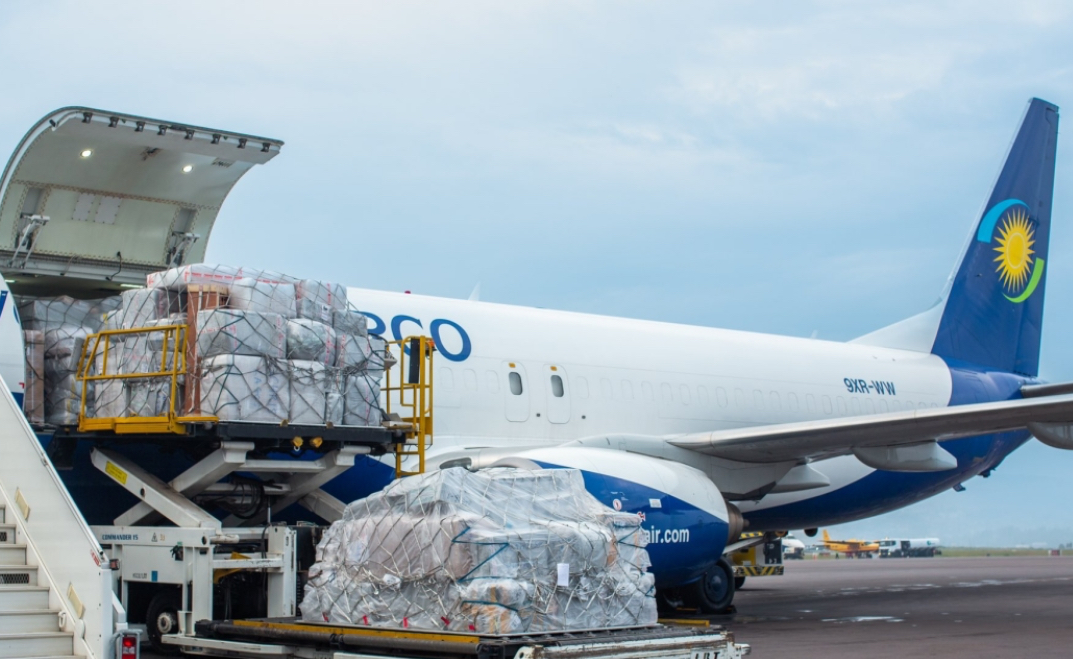
A look at Rwanda’s top 10 imports valued at Rwf2.8tn
Rwanda’s top 10 imported products in 2024 amounted to more than $1.95 billion (approx. Rwf2.8 trillion), according to the Trade & Industry Performance 2024 data by the Ministry of Trade and Industry, highlighting their importance in supporting both household consumption and industrial production.
Those products accounted for 28.4 per cent of the country’s total merchandise import bill of more than $6.88 billion in 2024.
While the country’s total merchandise exports reached over $3.16 billion in 2024, marking a 27.4 per cent increase from $2.48 billion in 2023, total imports rose by 11.2 per cent, from more than $6.19 billion in 2023 to over $6.88 billion in 2024.
As a result, Rwanda recorded a trade deficit of more than $3.71 billion in 2024.
As per the Trade & Industry Performance 2024 data, petroleum oils (fuel) topped the list, reaching $680 million import bill – marking a 9.5 per cent increase from $621 million in 2023. Rice was the second-largest import, rising by 32.6 per cent to $317 million from $239 million.
Other major imports and their year-over-year changes, as per the same data, included:
Cane sugar and chemically pure sucrose – $238 million in 2024 ( representing an increase of 24 per cent, up from $192 million in 2023)
Palm oil and its fractions – $207 million (implying a decrease of 12.7 per cent, down from $237 million)
Motor cars – $108 million ( a decrease of 4.4 per cent, down from $113 million)
Cement – $94 million ( a 40.3 per cent rise, up from $67 million)
Frozen fish (excluding fillets) – $92 million ( a growth of 31.4 per cent, up from $70 million)
Pharmaceutical products – $82 million ( a 9.9 per cent drop, down from $91 million)
Electrical apparatus for sound or visual signaling – $75 million (a decline of about 47.2 per cent, down from $142 million)
Insulated wire, cables, and electric conductors – $62 million (reflecting a reduction of 27.1 per cent, down from $85 million).
Some of top imported volumes in 2024, according to data from the Ministry of Trade and Industry are:
Petroleum oils – 816,000 tonnes
Cement – 818,000 tonnes
Rice – 509,000 tonnes
Cane/beet sugar and chemically pure sucrose – 308,000 tonnes
Palm oil and its fractions – 196,000 tonnes
Frozen fish (excluding fillets) – 89,000 tonnes
What's driving these imports?
The Minister of Trade and Industry, Prudence Sebahizi, told The New Times that the import bill fluctuations observed in the past year can be associated with multiple factors, pointing out that, as a general rule of thumb,
Why are these products the top imports for Rwanda?
There are various different reasons for these products comprising Rwanda's top imports, Sebahizi said, stating that petroleum and motor vehicles are naturally transportation-related goods that are not locally produced.
Rice, palm oil, sugar and frozen fish are food products, which, whilst locally produced, do not meet local demand. Notably, petroleum, cooking oil, rice, and pharmaceutical products are generally demand inelastic and vulnerable to price fluctuations because they are demanded almost irrespective of price, he explained.
Some of these products are inputs to economic activity, such as cement imports of clinker being further processed. Other products, such as wire equipment, are both consumer goods and potentially industrial inputs that are ubiquitous but not available at scale locally, he added.
Strengthening industrial sector and expanding market access as the way forward
Sebahizi said that the import bill alone can't paint a fully informative picture of the health of the country’s economy.
Especially for a dynamic and developing economy like Rwanda, he held that developing and diversifying its export ability is the way towards narrowing the trade deficit and achieving a healthier export-import ratio.
“We are focused on implementing policies that favor and attract investors to develop our industrial sector and broadening our market access on the continental and global level. The Industrial Policy in place sets a clear path towards this goal,” he said.
He indicated that priority sectors in the second National Strategy for Transformation (NST2), which runs from 2024/25 through 2038/29, along with the trade policies and other continental and regional efforts like the African Continental Free Trade Area (AfCFTA), are all oriented towards export development and domestic market recapture.

Namers for the 21st Kwita Izina Gorilla Naming Ceremony

Rwanda and Botswana Strengthen Bilateral Defence Cooperation

Rwanda and Zimbabwe move to deepen parliamentary cooperation

Kwita Izina2026: 22 baby gorillas to be named

Rwanda’s annual agricultural exports surpass $1bn for first time

ZIMBABWE STAFF COLLEGE DELEGATION EXPLORES RWANDA'S SECURITY TRANSFORMATION AND GOVERNANCE DURING STUDY TOUR

Kwibohora32:Rwanda and Zimbabwe pledge deeper ties

Kwibohora32: Hon. Minister Murwira hails resilience of Rwandese after the 1994 Genocide Against the Tutsi
