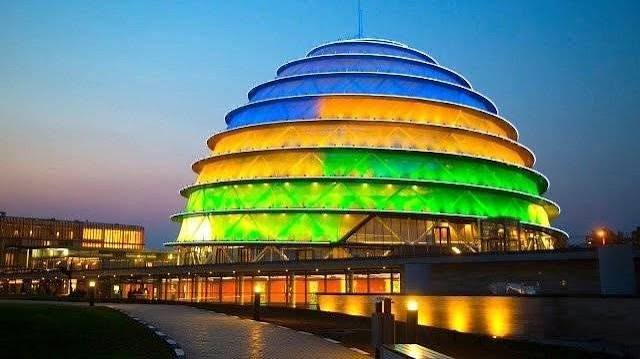
Rwanda’s knowledge-based economy a model for COMESA
The Common Market for Eastern and Southern Africa (COMESA) was established in December 1994, following the ratification of the COMESA Treaty in Lilongwe, Malawi.
In 2004, Rwanda joined the COMESA bloc, and a little over two decades, it has become a model economy that has been referenced by both the Global North and Global South states as a model of strategic economic efficiency in the digital era.
At a time of technological advancement coupled with the use of artificial intelligence, this year’s COMESA theme, “One Market, One Future: Advancing Inclusive Industrialisation, Investment and Regional Integration in COMESA” addresses what member states have done, and Rwanda has done better.
According to COMESA, Rwanda’s key leverage in the bloc has been centred on its high-performing policy implementation, progressive digital and economic reforms, and strategic leadership in regional integration. These leverages have been registered due to the country’s good governance, aggressive anti-corruption enforcement, and rapid business reforms. Recommendations have been made on the need to have some aspects of Rwanda’s economic model be deployed where necessary, to synchronise softwares for border and customs management for the long term. It is now an exemplary knowledge-based economy that is now a requirement for modern society.
Rwanda at a glance
Rwanda’s long-term Vision 2050 strategy places private-sector-led growth at the centre of its development ambitions. Government projections have targeted an average economic growth of about 12 percent annually between 2025 and 2035, followed by growth of more than nine percent a year from 2036 to 2050.
The country is currently intensifying efforts to attract private investment as it pursues an ambitious economic transformation agenda aimed at laying the foundations of a high-income economy by 2050. The initiatives being implemented through the National Strategy for Transformation (NST) place greater emphasis on expanding production, industrialisation, higher-value exports and developing a knowledge-based economy.
The shift from the traditional economy is has created opportunities for investors across a broad range of sectors, including infrastructure, energy, transport, information and communications technology, financial services, manufacturing and affordable housing.
Investor-friendly business environment
Rwanda has undertaken reforms aimed at making it easier for businesses to establish and operate in the country. Business registration has been highly digitalised and can be completed within hours, while the Rwanda Development Board (RDB) provides investors with facilitation, acceleration and aftercare services through a one-stop centre.
Rwanda recorded Africa’s highest score on the regulatory-framework pillar of the World Bank’s Business Ready (B-READY) 2025 Report, highlighting its efforts to strengthen the business environment. The country also ranked first in Africa for anti-corruption in the preliminary findings of the 2026 Ibrahim Index of African Governance (IIAG), retaining the top position it has held since 2016. The investment framework provides incentives for qualifying investors.
Investors committing more than US$50 million can qualify for a seven-year corporate income tax holiday, while a preferential 15% corporate tax rate is available to qualifying businesses, including certain exporters and companies operating in designated priority sectors.
Companies establishing regional headquarters in Rwanda can also qualify for a zero-percent corporate income tax rate under the applicable investment framework. Other incentives include a 50% accelerated first-year depreciation allowance, exemption from capital gains tax and duty-free imports of qualifying machinery and inputs within the East African Community customs framework.
Rwanda’s investment ambitions are supported by a pipeline of major projects valued at more than US$1 billion, according to the RDB. The projects span affordable housing, smart cities, luxury resorts, technology hubs and industrial developments, including steel manufacturing. Urbanisation is expected to be a major driver of investment demand. Rwanda is targeting 70% of its population living in urban areas by 2050, creating opportunities in housing, commercial property, infrastructure, transport and utilities.
The real estate and construction sector already contributes about 16% of GDP, while the country’s population is projected to increase from approximately 13.2 million to 23.6 million by 2052. The combination of population growth and urbanisation is expected to increase demand for housing and supporting infrastructure.
One of the major developments being promoted to investors is the third phase of the Kigali Golf Resort & Villas, which requires an estimated US$300 million investment. The proposed development will include a luxury hotel, waterfront retail and shopping facilities, a sports centre and 689 ultra-luxury residences overlooking the golf course. The development illustrates Rwanda’s wider strategy of combining tourism, hospitality, property and leisure investment within integrated destinations.
From investment to production
Beyond individual projects, Rwanda’s current strategy is focused on ensuring that investment contributes directly to production, exports, employment and economic transformation. Manufacturing, technology, energy, infrastructure, financial services and housing are therefore central to the country’s investment proposition. Its membership of the East African Community also provides investors with access to a wider regional market.
Rwanda’s Vision 2050 ambitions are substantial and will require continued investment, private-sector participation and expansion of productive capacity. But with an expanding project pipeline, investment incentives and reforms aimed at improving the ease of doing business, the country is seeking to position itself as a regional destination for long-term investment.
Rwanda’s knowledge-based economy a model for COMESA

Namers for the 21st Kwita Izina Gorilla Naming Ceremony

Rwanda and Botswana Strengthen Bilateral Defence Cooperation

Rwanda and Zimbabwe move to deepen parliamentary cooperation

Kwita Izina2026: 22 baby gorillas to be named

Rwanda’s annual agricultural exports surpass $1bn for first time

ZIMBABWE STAFF COLLEGE DELEGATION EXPLORES RWANDA'S SECURITY TRANSFORMATION AND GOVERNANCE DURING STUDY TOUR

Kwibohora32:Rwanda and Zimbabwe pledge deeper ties
