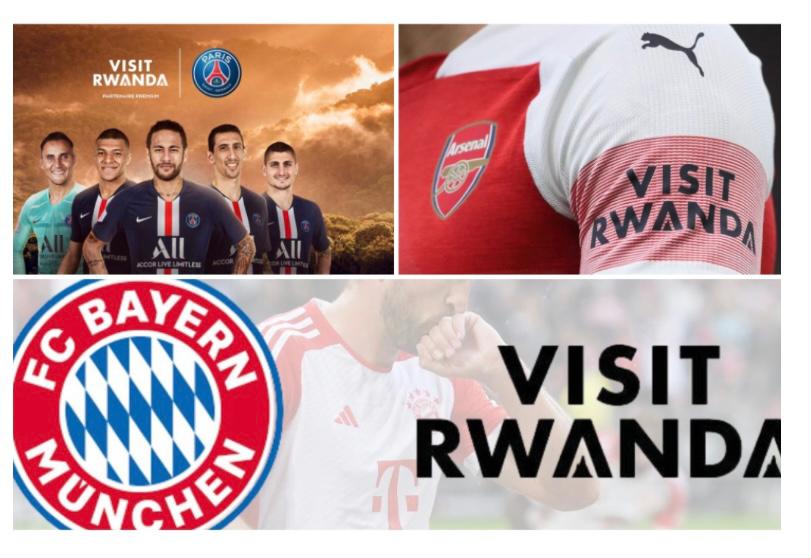
Don’t forget the intangibles: Rwanda’s partnership with Arsenal, PSG, and now, FC Bayern Munich
Hypothetically, could a shrewd entrepreneur striving to expand their business make the same costly mistake three times?
Common sense dictates otherwise. When one has a clear goal and the right mindset, every effort is exerted to reach that goal. While mistakes may occur along the way, repeating them, not twice but three times, is inconceivable.
Critics of Rwanda's partnerships with major football leagues and teams in the world allege that Rwanda is guilty of such a repetitive blunder. At best, this thinking is myopic and at worst, arrogant and degrading.
In my opinion, these critics don’t bash Rwanda’s partnerships with these teams because they are concerned over the state of human rights in Rwanda or the freedom of speech as they claim. If this was a genuine concern, they would adopt a more inquisitive stance rather than hastily resorting to racist and condescending conclusions.
You may wonder, why do they care about Rwanda’s moves?
Whenever a nation that was previously relegated to a different club (Third-Word) endeavours to attain financial independence and foster all-encompassing development for its citizens, the West — through their intermediaries — vigorously opposes that nation.
We have seen this in the past, we are seeing it with Rwanda, and we will see it in the future. That’s why we, Rwandans, are not fazed.
On the subject of these partnerships and their impact on Rwanda's tourism sector, it is worth noting the significant growth achieved in the last decades. Today, tourism ranks as Rwanda's second most lucrative sector, surpassed only by mining.
These collaborations have played an instrumental role in elevating Rwanda as a global tourist destination. Beyond tangible benefits like increased visitors and investments, young Rwandans gaining access to football training from these teams' academies, and job opportunities for Rwandans, there are intangible advantages as well.
Not long ago, Rwanda was scarcely known internationally, with the majority of those aware of it associating the nation with the Genocide against the Tutsi. Consequently, when stating one's origin as Rwanda abroad, the typical response was, “huh?”
This is no longer the case, and the two words “Visit Rwanda” on Arsenal and PSG jerseys have contributed to this change.
More importantly, the impact extends beyond mere recognition; Rwanda is now perceived as a viable travel destination by individuals from countries as varied as South Korea, Singapore, Guatemala, Scandinavian countries, and others who previously overlooked it - or simply weren’t aware of Rwanda’s existence. Some have already visited, and in the years to come, we anticipate a rising influx of tourists.
The second crucial aspect involves the impact on younger Rwandans. These high-profile partnerships instill the belief that no aspirations are too grand for them. The self-imposed limitations of the past have faded into obscurity.
In my view, these intangible benefits that strickle down far outweigh even the tangible ones.
Even the critics of Rwanda, particularly those sceptical of these partnerships, are aware of these benefits and the potential they hold. Which is why they exert pressure on Rwanda and these football clubs to cease these collaborations. Spoiler alert: their endeavour is bound to fail, as their arguments are profoundly feeble.
According to them, Rwanda should stay in the Third-World - whatever that means. If Rwanda - a small and landlocked country in the heart of Africa - was to be a big economy like Singapore, for instance, it would trigger a change so big on the continent that would ultimately undermine the remainder of the West’s influence on the continent.
As for the claim that Rwandans are suffering and the money invested in these football teams should go toward feeding and housing Rwandans, Rwanda is already doing that. Not only does 10% of the profit from the tourism sector go to the local communities, but Rwanda's investments extend far beyond tourism, encompassing technology, healthcare, agriculture, environmental conservation, infrastructure, and numerous other sectors designed to benefit all Rwandans.
Imagine advising a striving person - with capital - to consume that capital instead of investing it for greater returns because they have daily needs - utter shortsightedness. Yet, this is what the critics are saying.
In conclusion, critics underscore the fact that Rwanda, along with other nations pursuing an improved quality of life for their citizens, is steadfastly on the right path.

Namers for the 21st Kwita Izina Gorilla Naming Ceremony

Rwanda and Botswana Strengthen Bilateral Defence Cooperation

Rwanda and Zimbabwe move to deepen parliamentary cooperation

Kwita Izina2026: 22 baby gorillas to be named

Rwanda’s annual agricultural exports surpass $1bn for first time

ZIMBABWE STAFF COLLEGE DELEGATION EXPLORES RWANDA'S SECURITY TRANSFORMATION AND GOVERNANCE DURING STUDY TOUR

Kwibohora32:Rwanda and Zimbabwe pledge deeper ties

Kwibohora32: Hon. Minister Murwira hails resilience of Rwandese after the 1994 Genocide Against the Tutsi
